The people behind Scriba AI
An Italian innovation born from the collaboration between Algoretico and Lagiste23: proprietary technology, with no LLM, to migrate legacy code and prove that the result behaves like the original.
From an idea at Algoretico to a platform for the world
A significant share of the systems that run banks, insurers, leasing companies, logistics, manufacturing and public administration is still written in COBOL, RPG, PL/I, Natural and other earlier-generation languages. They work, but fewer and fewer people know them, running costs keep rising and every change requires skills that are hard to find. Migrating them is hard for a precise reason: their behaviour is documented only in the code, or in the minds of the people who wrote it.
The idea for Scriba was first theorised by Michele Laurelli within Algoretico, the AI company he founded. The intuition: don't translate code line by line, but reconstruct its application logic and business rules and rewrite them idiomatically, the way a team that works with the target stack every day would write them. To do this, Scriba uses no LLM, neither commercial nor open source: it is a system of specialised models and deterministic components, coordinated by proprietary orchestration and verification gates. Client code is not sent to model providers.
Scriba was then born as a spinoff of Algoretico, joined by Lagiste23, the Family Office led by Marco Landi (former President of Apple at Cupertino). Together they created a vertical company that offers migration as a service: the client sends the legacy application together with the rules of the target system, and Scriba returns it converted, tested and documented, with the evidence that it behaves like the original, at a fixed, guaranteed price.
The message is clear: real AI innovation comes from Italy.
A system, not a model
Six principles that define Scriba AI, from the technology to the way we deliver the result.
Italian proprietary technology
Designed and built in Italy, entirely in-house: specialised models, deterministic components and a proprietary orchestration layer.
No LLM
Neither commercial nor open source. Each component has a narrowly defined task, and moving from one phase to the next depends on deterministic verification gates.
Migration as a service
You send us the legacy code with the rules of the target system; we return it converted, tested and documented. One single party accountable for the result.
Verifiability
The work is complete when every test and quality gate declared before kick-off passes, including differential tests against the original system.
Idiomatic code
No JOBOL: we reconstruct the business logic and rewrite it the way a team working with that stack would, following your conventions.
Traceability
Every element of the migrated system traces back to the source: extracted rules, a source → target map and declared technical debt, never hidden in the code.
Leadership
The alliance of two Italian excellences: Algoretico and Lagiste23.
 SAG
SAGSusana Aguilera Gomez
Sole Administrator
International corporate leader. Oversees governance, institutional relationships and strategic direction.
LinkedIn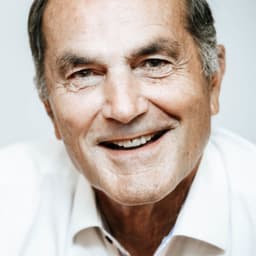 ML
MLMarco Landi
Senior Advisor
Former President of Apple at Cupertino. Leads Lagiste23. Advisor on international growth, partnerships and enterprise go-to-market.
LinkedIn ML
MLMichele Laurelli
Head of AI
Founder of Algoretico. Theorised and designed Scriba's proprietary conversion architecture. Leads AI development.
LinkedIn GL
GLGiovanni Landi
Senior Advisor
Decades of experience in enterprise technology and digital transformation. Advisor on strategy and market positioning.
LinkedIn AM
AMAlessandro Martinelli
Senior Project Manager
Senior project manager coordinating delivery, teams and enterprise customers.
LinkedIn GG
GGGentrit Gashi
Operation Manager
Manages daily operations and coordinates internal workflows.
 FM
FMFisnik Murati
Developer
Software developer, handles platform development and maintenance.
How we got here
Theorisation at Algoretico
Within Algoretico, Michele Laurelli theorises a proprietary code conversion system built on specialised models and deterministic components, with no LLM.
Scriba is born
Scriba launches as a spinoff of Algoretico, joined by Lagiste23 (Marco Landi's Family Office). Joint investment to build a vertical company tackling the legacy code crisis.
R&D phase
Development of the proprietary pipeline: per-language and per-dialect parsers, semantic analysis, business-logic reconstruction, idiomatic code generation and deterministic verification gates between phases. No LLM: everything is proprietary.
First prototype
Working prototype converting COBOL to Java with full business-logic preservation. First validation on real enterprise codebases. The system acts as a 'digital archaeologist' of code.
Service launch
Scriba AI launches migration as a service across 60+ languages, with validation based on differential tests against the original system. First System Integrator agreements signed across Italy and Europe.
What drives us
We believe legacy code is not just technical debt: it is institutional knowledge, layered over decades of business rules. Our mission is to preserve it in a modern, maintainable form, and to prove it with verifiable criteria, not promises.
“How do you prove that the migrated system behaves like the original?”
Sooner or later, every alternative produces code that compiles. Our answer is a verifiable criterion: the migration is complete when the code passes every test and quality gate specified by the client, including differential tests that compare the outputs of the migrated system with those of the original on the same inputs.
- A single party accountable for the result, from code analysis to delivery of the evidence.
- No infrastructure to build or maintain: no GPUs, no subscriptions to external models.
- A fixed price, set before work starts on the actual scope analysed, not on a usage estimate.
Want to know more?
Tell us about the system you want to migrate: together we'll assess the scope, the target stack and the PoC terms. System integrators and technology partners are welcome.